October - Beat the Cold - Buy a Warm Home!
Interior French Drain Basement Waterproofing Systems
Healthy homes series
What They Are, Why They’re Installed, and How They Protect Your Home
Basement water intrusion is one of the most common — and misunderstood — issues homeowners face. An interior French drain system is a widely used waterproofing solution designed to manage water at the foundation level, not fight it at the surface.
Rather than trying to stop water from ever reaching the foundation (which is rarely realistic), this system controls where the water goes once it gets there — safely and predictably.
Why Interior French Drain Systems Are Installed
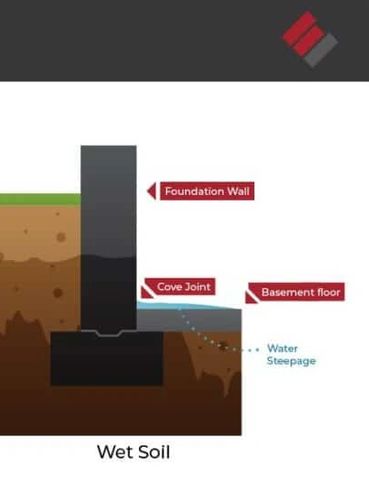
Homes experience groundwater pressure from rain, snowmelt, and seasonal water table changes. When this water builds up around the foundation, it naturally looks for a way inside — often at:
- The foundation wall–to–footer joint
- Hairline foundation cracks
- Block wall mortar joints
- Areas with poor exterior drainage
Interior French drains are installed when:
- A basement shows recurring seepage or dampness
- Exterior waterproofing is impractical or cost-prohibitive
- Long-term moisture control is needed to protect finishes, air quality, and structure
The goal isn’t to make the basement “waterproof” in the literal sense — it’s to relieve pressure and control water movement.
How an Interior French Drain System Works
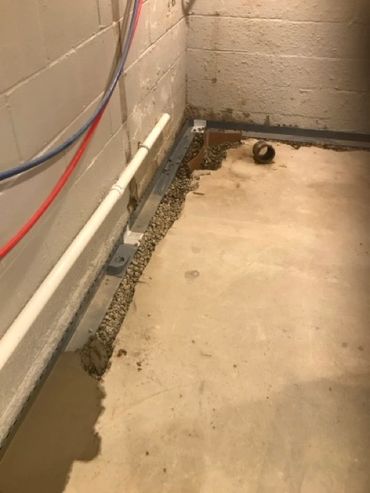
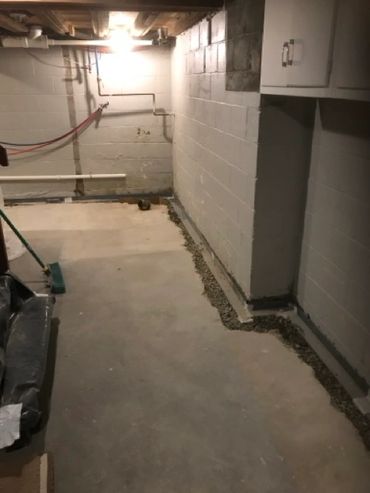
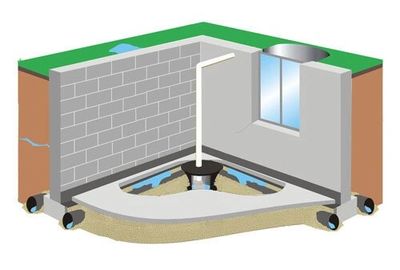
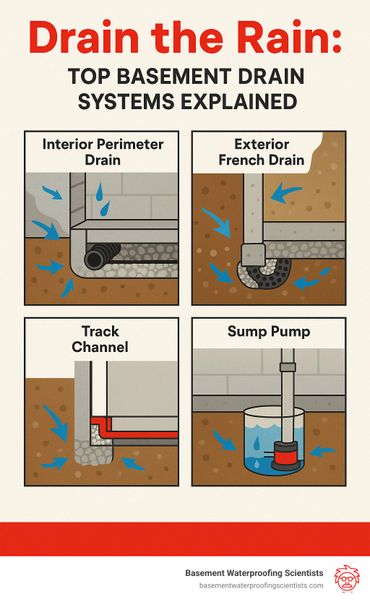
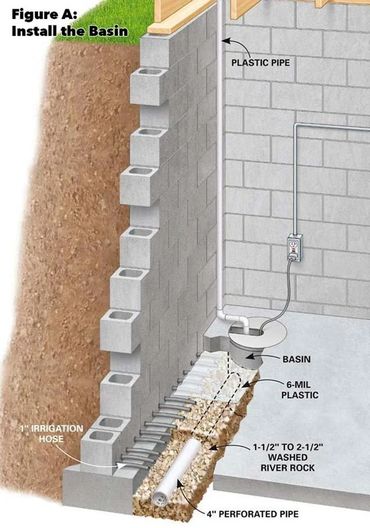
An interior French drain system is installed along the inside perimeter of the basement, typically at the base of the foundation wall.
Step-by-step function:
- Water reaches the foundation
Groundwater builds up outside the foundation and enters at the footer or wall joint. - Water is intercepted at the lowest point
A narrow trench is cut into the concrete slab along the foundation perimeter. - Perforated drain channel collects water
A drainage channel or perforated pipe sits at the footer level, allowing water to enter freely. - Water is directed to a sump pit
Gravity moves collected water toward a sump basin. - Sump pump safely discharges water
The pump sends water away from the foundation through a dedicated discharge line.
This system keeps water from rising onto the basement floor, reducing moisture, humidity, and damage risk.
Drain Trays, Channels, and Installation Details
Modern interior French drain systems typically use rigid drain trays, drain tile, or formed channels, not loose gravel alone. These trays are designed to:
- Maintain consistent slope toward the sump
- Prevent sediment buildup
- Allow easier future access if needed
- Support the concrete slab once re-poured
After the tray or pipe is installed:
- The trench is often filled with clean stone
- Concrete is poured back over the system
- The finished floor appears nearly unchanged
What an Interior French Drain Does Not Do
It’s important for homeowners to understand limitations:
- It does not stop water from reaching the foundation
- It does not fix exterior grading or gutter problems
- It does not eliminate the need for a functioning sump pump
- It does not replace proper basement airflow and moisture control
Instead, it’s a water management system, not a water-elimination system — and when installed correctly, it’s highly effective.
Finishing a Basement? Airflow Matters Just as Much as Drainage
Installing a French drain is only one part of keeping a basement healthy — how the basement is finished matters just as much.
Improperly finished basements can trap moisture behind walls, leading to:
- Mold growth
- Odors
- Hidden material deterioration
- Poor indoor air quality
When finishing a basement, it’s critical to:
- Maintain airflow behind walls
- Use moisture-tolerant materials
- Avoid tight wall systems directly against foundation walls
👉 We cover this in detail in a related article:
“How to Finish a Basement While Maintaining Proper Airflow Behind Walls”
That article explains framing techniques, spacing, insulation choices, and ventilation strategies that work with a French drain system — not against it.
The Big Takeaway
Interior French drain systems are a proven, effective solution for managing basement water intrusion when installed correctly and paired with:
- A reliable sump pump
- Proper exterior drainage
- Thoughtful basement finishing practices
They don’t make a basement invincible — but they dramatically reduce water risk and help protect the home’s structure, finishes, and indoor air quality.
If you’re unsure whether a system is installed correctly — or how it affects future basement finishing — a qualified home inspection can help clarify what’s present, how it works, and what to watch for over time.